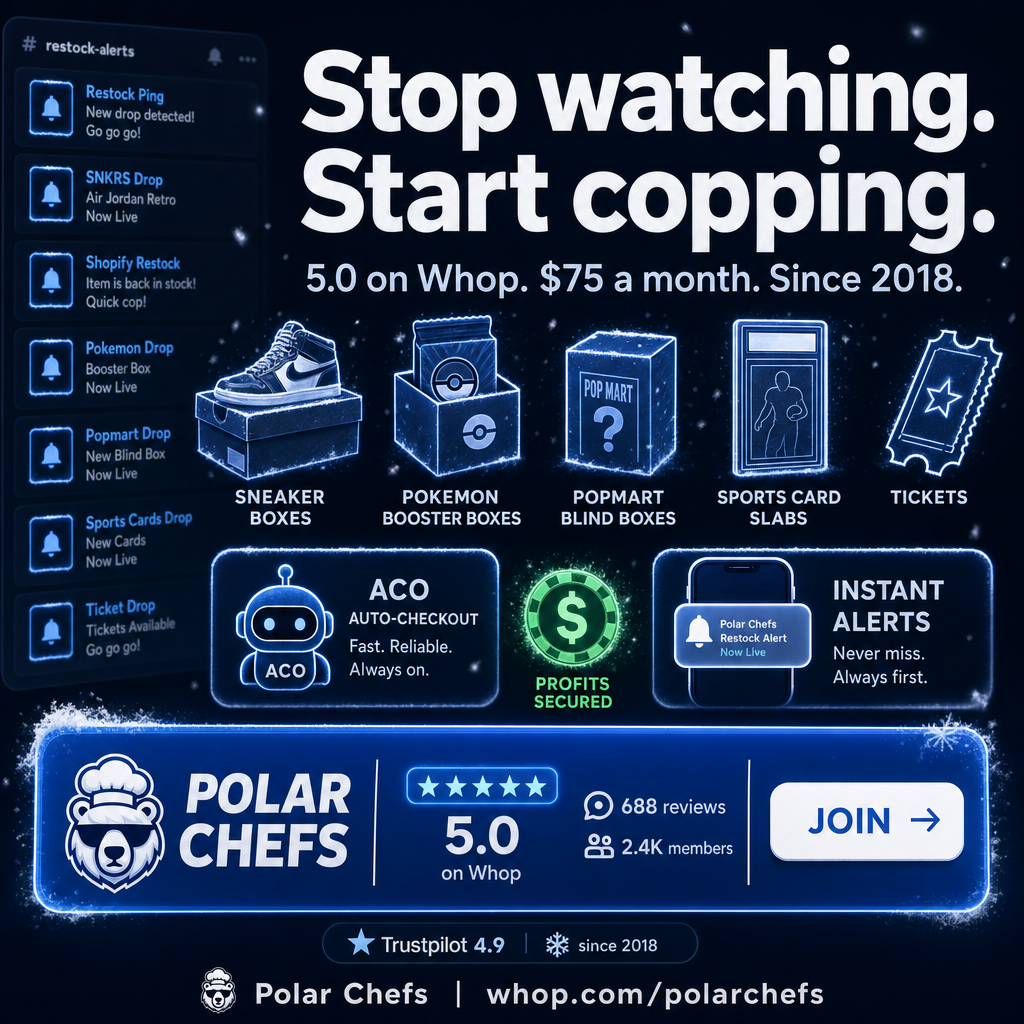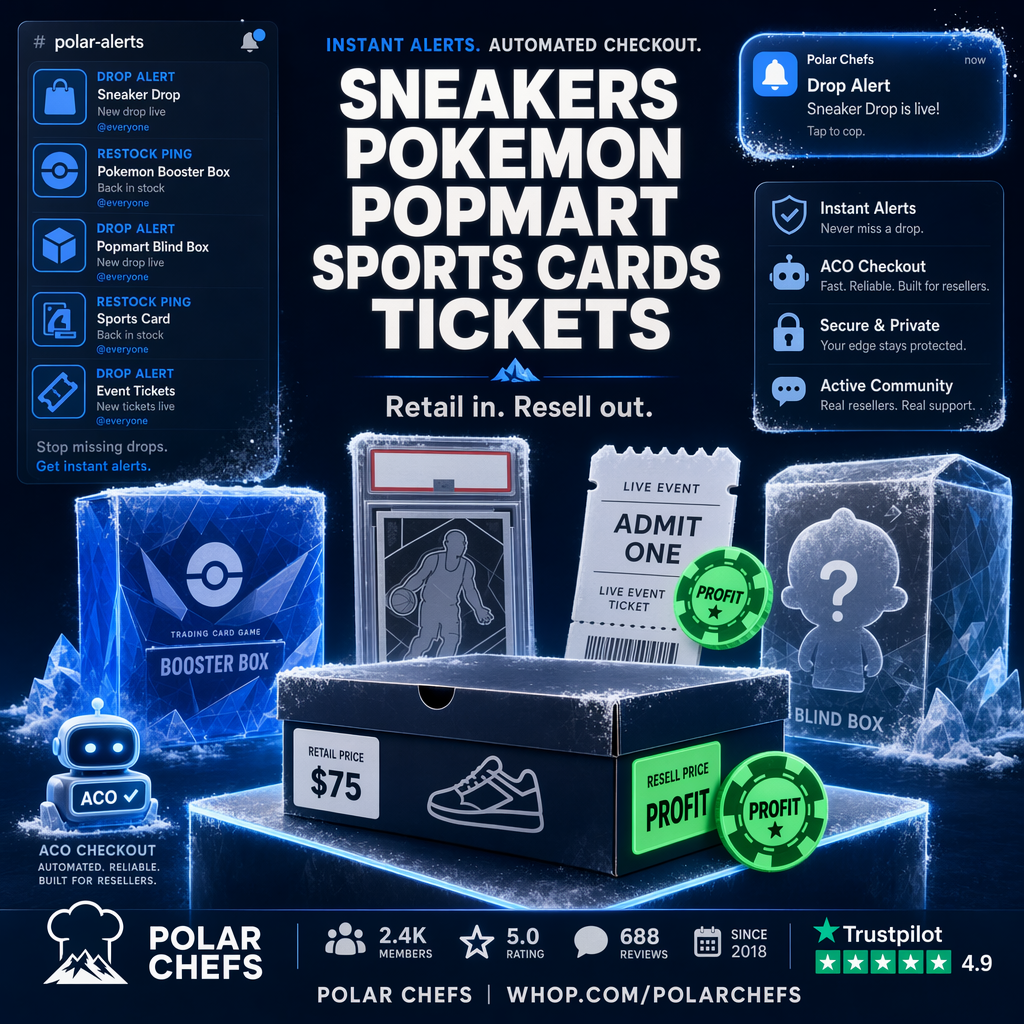
Sneakers get attention, but sealed collectibles can be a steadier resale lane. Here is what to watch and where the risk sits.
The problem usually feels personal. You see the item after everyone else. You open the retail page after stock has already thinned out. You check resale comps too late. You tell yourself the next drop will be different, then the same thing happens again: the public page is live, the best sizes or variants vanish, and the people who prepared before the alert are already talking about order confirmations.
That is the pain this collectibles guide is written around. Not hype. Not screenshots. The expensive feeling is being close enough to see the opportunity, but too late to turn it into inventory. Polar Chefs is interesting because it attacks that specific gap: signal, context, checkout help, and community support in one place. The test is whether that gap is costing you more than the membership.
The costly false belief
Collectibles are not just toys. Collectors create real markets, and sealed supply can become valuable when demand continues after a set or series stops printing.
That belief is expensive because it points your effort at the wrong part of the game. Most public reselling advice talks about what to buy after the market already understands it. By then, the edge is thinner. The useful question is earlier: who knew before the wider crowd, who had the checkout setup ready, who understood the exit price, and who had the discipline to skip weak plays?
The false belief also makes beginners overrate motivation. Wanting a drop badly does not add stock to a retailer. Refreshing harder does not improve your shipping profile. Reading a success screenshot does not tell you fees, cancellations, returns, or how long the item took to sell. Motivation helps you show up. It does not replace an operating system.
The true belief is narrower and more useful: reselling is not won by desire; it is won by earlier information, cleaner execution, and stricter selection. That does not make profit guaranteed. It simply explains why two people can chase the same product and get different outcomes. One is reacting. The other is running a process.
What Polar Chefs is, without the brochure language
Polar Chefs is a paid reselling cook group sold through Whop. The public proof baseline this site is using is 5.0 stars from 689 ratings, around 2.4K members, running since 2018, with a current membership baseline of $75/month. Those numbers are not a personal forecast. They are context for deciding whether the product deserves a serious test.
In plain English, a cook group is a private operating room for resellers. It watches opportunities across lanes, turns noisy market movement into alerts, helps members prepare for drops, and gives people a place to ask practical questions before capital is on the line. The value is not the Discord label. The value is whether the room gets you from confusion to a better decision faster.
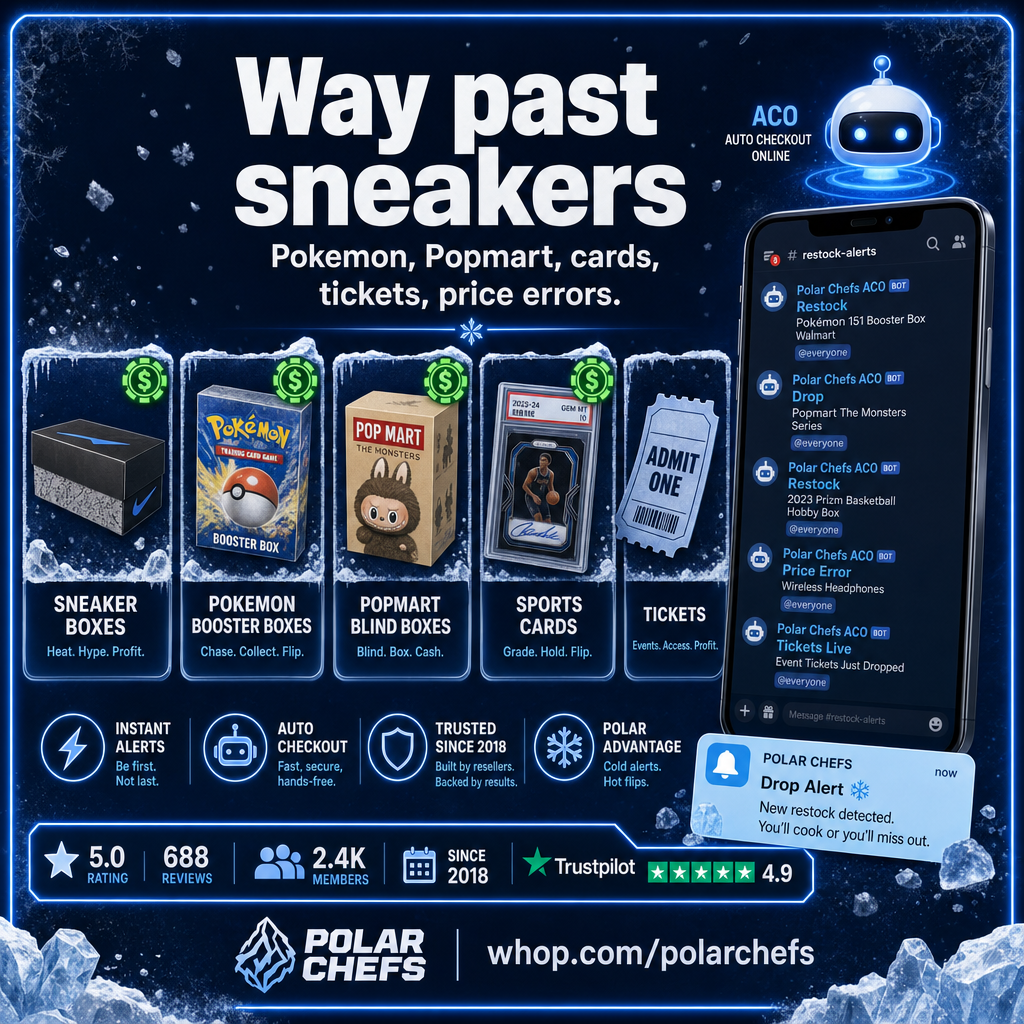
For Polar Chefs, the pitch is broad coverage plus execution help: sneakers, collectibles, price errors, clearance, tickets, retail arbitrage, and included ACO. That matters because beginners often make the same expensive mistake in reverse. They either buy a feed with no checkout help, or they buy checkout tooling before they know which plays deserve checkout speed. The bundle tries to close both gaps.
| Before | After a good cook-group workflow |
|---|---|
| You hear about drops from public posts. | You see alerts while the play is still alive. |
| You guess whether resale exists. | You check comps, fees, demand, and sell-through before buying. |
| You type checkout details under pressure. | You prepare profiles, accounts, and ACO where appropriate. |
| You chase everything. | You filter for plays that fit your capital and risk. |
Who this is for
This is for the reseller who has enough capital to buy inventory, enough time to act on alerts, and enough discipline to pass on weak opportunities. It is also for the serious beginner who understands that a paid group is not a wage. You are buying better inputs and a faster learning loop, not a guaranteed output.
It can fit you if you keep losing because you are late, scattered, or unsure which drops are worth preparing for. It can also fit you if you already resell in one lane and want more shots without building every monitor, source list, and checkout process yourself. The point is leverage. You still decide what to buy.
Close the tab if the $75/month fee would strain you, if you have no inventory budget, if you need passive income, or if you want someone else to take responsibility for every buy. The wrong buyer turns a cook group into a slot machine. The right buyer treats it like infrastructure.
That disqualification matters. A lot of bad reselling content sells the dream to people who cannot afford the downside. That is not the angle here. If a product would hurt to hold, return, or sell slowly, you should not buy it because an alert appeared. A good room can surface opportunity. It cannot change your personal risk limits.
The named mechanism: signal plus checkout discipline
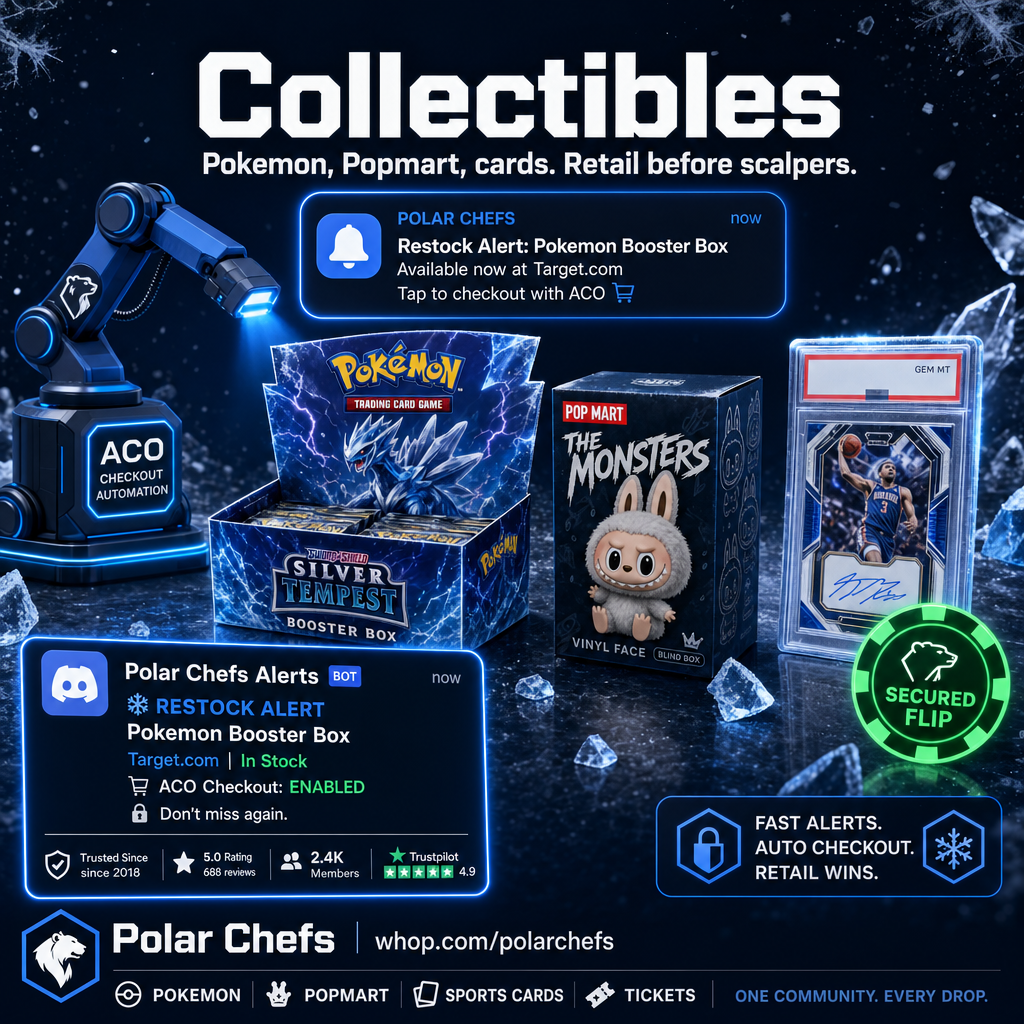
The edge is knowing which releases deserve capital and where they are dropping. Polar Chefs surfaces collectible drops beside faster resale lanes, so you can compare opportunities instead of guessing alone.
The mechanism is not magic. Call it the signal-to-checkout loop. First, the group surfaces the play before it becomes stale. Second, the member checks whether the play has a real exit: resale comps, demand, fees, shipping, platform rules, and likely sell-through. Third, the member prepares checkout, including ACO when the drop rewards speed. Fourth, the member reviews what happened and tightens the next attempt.
That loop is the difference between alerts and action. An alert without a decision framework is noise. A bot without a decision framework is a faster way to buy bad inventory. A community without execution tooling becomes chat. Polar Chefs is strongest when those parts are used together: the alert says look here, the context says whether it is worth touching, and the checkout setup gives you a fighting chance if the answer is yes.
The best part of this mechanism is also the part beginners resist: skipping. The feed might show ten tempting things. Your job is not to buy ten. Your job is to find the one that fits your capital, your platform access, your shipping reality, and your appetite for holding inventory. Skipping is not fear. Skipping is selection.
The buyer math
Sealed product keeps optionality: buyers can hold, open, grade from it, or collect it. That supports demand, but fees, condition, and sell-through still decide profit.
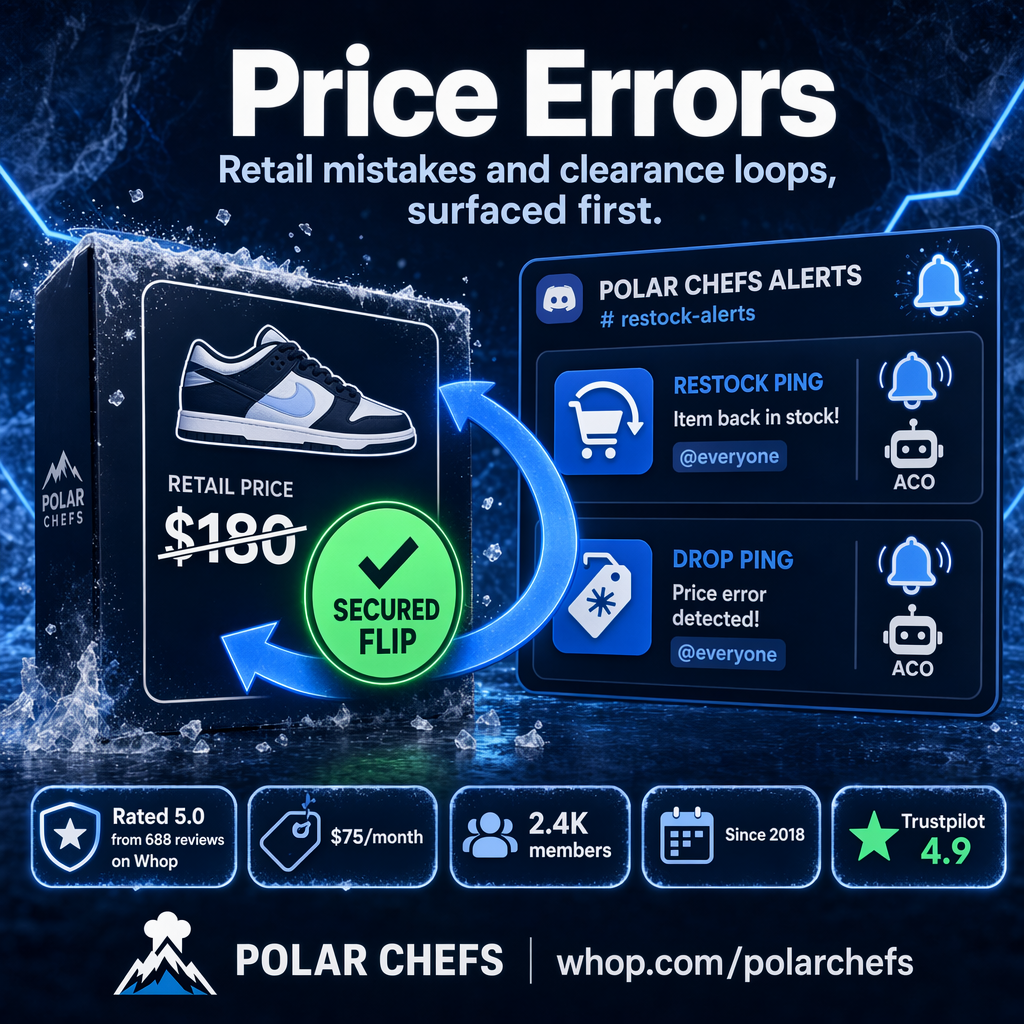
The membership price gives you a clean hurdle. At $75/month, the question is not whether Polar Chefs sounds impressive. The question is whether it helps you find, understand, or execute enough real opportunities to justify keeping it. One successful modest flip can cover the fee. Several failed or forced buys can cost far more than the fee. Both sentences are true, which is why discipline matters.
Do the math before the buy, not after. Start with retail price. Add taxes, shipping, payment fees if relevant, platform fees, packaging, postage, and your expected time to sell. Then subtract that full cost from realistic resale, not the highest listing you saw. If the margin still survives, the play may be worth considering. If the margin only works in the best-case screenshot version, pass.
Vendor proof should be handled the same way. Ratings, member count, years operating, and public examples increase confidence that the product is real and used. They do not prove your personal result. Treat 5.0 stars from 689 ratings, around 2.4K members, running since 2018 as trust context. Treat any income screenshot as a case study, not a contract.
How it compares to the other ways beginners try to resell
| Option | Where it wins | Where it breaks |
|---|---|---|
| Free social feeds | No membership cost and easy to browse. | Often late, noisy, incomplete, or built for engagement rather than execution. |
| Single-lane paid groups | Deep focus in one market. | Can leave beginners stranded when that lane goes quiet. |
| Standalone bots | Useful when speed is the bottleneck. | Can be expensive and dangerous if you do not know what to buy. |
| Manual research alone | Builds judgment and costs nothing but time. | Slow, fragmented, and hard to scale across drops. |
| Polar Chefs | Broad signal, community context, and included ACO inside one membership. | Still requires capital, time, judgement, and risk control. |
This is the honest positioning. Polar Chefs does not need to be the best possible answer for every reseller in every lane. That claim would be lazy. The more defensible claim is narrower: if your problem is scattered opportunity discovery plus slow execution, a broad cook group with checkout support is a rational thing to test.
A practical workflow for the first month
Week one is orientation. Join, read the onboarding material, identify the channels that match your capital, and watch before you buy. Your job is to learn the room's rhythm. Which alerts move quickly? Which ones need more research? Which lanes match your region? Which plays are too large for your budget?
Week two is preparation. Build the boring parts: retailer accounts, shipping addresses, payment methods, resale-platform accounts, spreadsheets, and notes for fees. If ACO is relevant for your lane, learn the setup before the drop. The worst time to configure checkout is while stock is disappearing.
Week three is selective action. Pick a small number of plays where the math survives. Do not make the membership prove itself by forcing buys. That is backwards. Let the group bring opportunities to your desk, then make each opportunity earn the right to use your money.
Week four is review. Count shipped orders, cancellations, unsold inventory, time spent, fees, and cash locked up. Ask one clean question: did Polar Chefs improve your signal, execution, or learning enough to justify another month? If yes, keep refining. If not, leave with what you learned.
- Pick one or two lanes first; do not chase the whole room.
- Write down your max spend before alerts start firing.
- Check sold comps, not hopeful listings.
- Use ACO only when speed is the real bottleneck.
- Track cancellations and slow sells as seriously as wins.
- Review the month before renewing.
Where to be careful
Hype cools. Reprints happen. Counterfeits exist. Shipping damage hurts value. Long-term appreciation is a thesis, not a contract.
The first caveat is capital. A $75/month membership is only part of the cost. Inventory is the real exposure. A beginner with no spare capital can feel pressured to make the fee back and start taking poor plays. That is how a useful tool becomes an expensive habit.
The second caveat is time. Alerts reward presence. If you cannot check the room, prepare accounts, read instructions, and act during release windows, the membership will feel worse than it is. You are paying for live opportunity. Live opportunity punishes absence.
The third caveat is market risk. Retailers cancel orders. Products get restocked. Platforms charge fees. Buyers return items. Demand cools. Ticket rules change. Collectibles get reprinted. Sneaker sizes matter. None of that disappears because the alert came from a paid group.
The fourth caveat is psychology. A busy feed can make weak plays look urgent. The alert is designed to focus attention, not to override judgment. If you feel yourself buying because other people are excited, slow down. The crowd can be useful for information. The crowd should not control your wallet.
Verdict
Collectibles are a strong second lane for resellers who want more than sneaker chaos. Use them to diversify, not to gamble.
My decision filter is simple: buy the first month only if you can afford both the membership and the inventory, you can show up consistently, and your main problem is being late, scattered, or under-tooled. That is the buyer Polar Chefs appears built for. The public proof baseline supports a test: 5.0 stars from 689 ratings, around 2.4K members, running since 2018. The price is concrete: $75/month. The result is not guaranteed.
Skip it if you want passive income, if you need the group to tell you every answer, or if you are trying to turn your last spare money into a miracle. A cook group should reduce confusion. It should not become pressure. The right way to test it is controlled, tracked, and honest.
FAQ
Is Pokemon, Popmart, and Cards beginner-friendly?
It can be beginner-friendly if you treat the first month as training and testing. The beginner mistake is joining and immediately copying every alert. A better approach is to study the channels, choose one or two lanes, learn the checkout process, and act only when the numbers survive fees and shipping.
Does Polar Chefs guarantee profit?
No. Nothing in this article should be read as an income guarantee. Polar Chefs can improve signal, support, and execution, but the market still decides demand and your decisions still control risk. Profit only exists after an item ships, sells, and clears fees.
Why does included ACO matter?
ACO matters when speed is the bottleneck. If stock disappears while you type checkout details, automation can help. It does not make every play good. The correct order is signal, math, then checkout speed. Reversing that order is how people buy weak inventory faster.
What should I verify before joining?
Verify the live Whop price, current ratings, refund terms, included features, your region fit, and whether the active lanes match your goals. Public facts can change. A serious buyer checks the live page before paying.
How long should I test it?
A month is a fair first test for most serious beginners because it gives you time to onboard, watch alerts, prepare checkout, try selected plays, and review the results. Renew because the process helped, not because you feel committed after joining.
What is the biggest mistake to avoid?
The biggest mistake is confusing access with judgment. Access to alerts is useful. Judgment decides whether the alert deserves money. Track every buy, every cancellation, every slow sell, and every fee. That record will teach you faster than screenshots.
Read next
This article connects most closely to Popmart Reselling Guide: How Blind-Box Scarcity Turns Into Margin, Pokemon Card Reselling: Sealed Product, Singles, and the Risk Nobody Mentions, Clearance Reselling Loops: The Quiet Play Beginners Ignore.
Read next
- Popmart Reselling Guide: How Blind-Box Scarcity Turns Into Margin
- Pokemon Card Reselling: Sealed Product, Singles, and the Risk Nobody Mentions
- Clearance Reselling Loops: The Quiet Play Beginners Ignore
Final decision
If your real bottleneck is pokemon, popmart, faster decisions, and cleaner checkout execution, Polar Chefs is worth a controlled test. If your bottleneck is lack of capital, lack of time, or expecting guaranteed income, it is not the right move yet.